
I’m blessed to have many, many, many friends. I’m so grateful for that.
But I noticed something painful and uncomfortable recently about my friendships.
I have a mental shortlist of which friends I can turn to when I am having a hard time, when there’s something especially painful and confusing on my heart, and reliably expect the specific kind of high quality care I really value and want to receive. And unfortunately, this mental list is very short.
I’m grateful that I have a lot of friends. All of my friends love me, and want to support me. And they do support me, in a lot of different ways.
But it’s a very few who can and consistently do show up in one specific way that really matters to me. The kind of friends who can consistently scratch an itch on my heart in just the right place, in just the right way.
By contrast, I like to think that I’m pretty good at showing up for my friends in this way. That I’m pretty good at holding space, and providing emotional support. I’m not perfect at it. I’m sure there are ways I could be better at it. I’m sure I could learn more. But I think I’m pretty good, and I consistently get the message from my friends that they like receiving my support, that they like how I show up for them.
I’d guess that many, if not most of my friends would like to be able to give me that same kind of support, too. And even more broadly, I think the world is hungry for this—that there are many people who value these skills, and would like to be better at them.
To be frank, I think it’s a skill issue. That many people simply aren’t very good at providing emotional support, holding space, showing up in a particular way.
The good news about a skill issue is that skills can be learned, that this, too, is a solvable problem. So that’s what this post is for: to show U how I think about attunement, and showing up for a friend—how to hold space for them, how to provide emotional and psychological support for them.
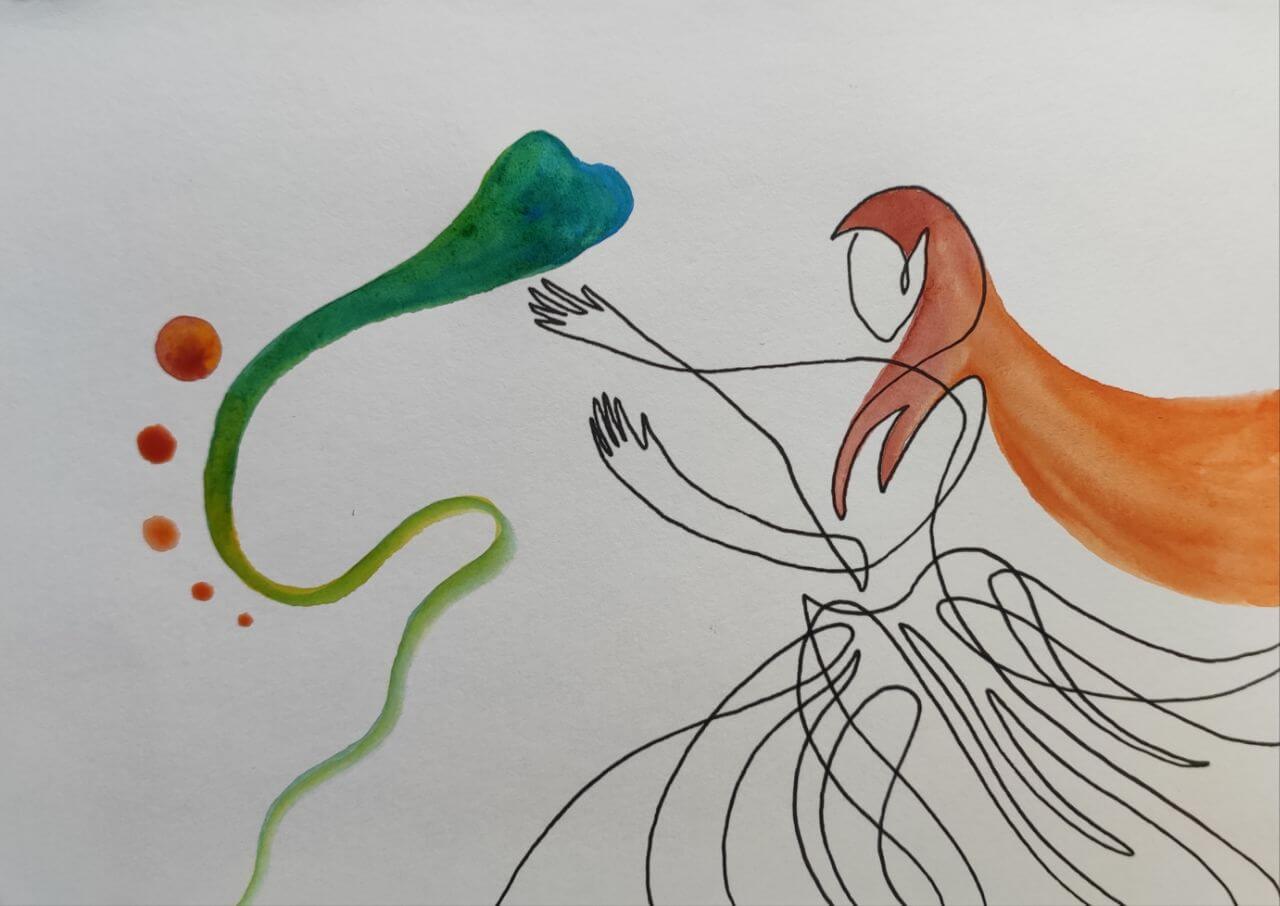
Attunement and Holding Space
I would define attunement in this moment as the ability to be present with oneself and others, to be responsive to the present circumstances in a way that is good for all parties. To me, at its core, attunement looks like: watching, listening, feeling, sensing, remembering, connecting, inquiring—being present, and responding from there, dynamically, intuitively.
I would define holding space as the ability to be present with another, with someone who is going through something important or difficult or painful or confusing, who wishes to share that with U. The ability to embody loving presence, unconditional love, deep kindness and curiosity, in a way that is grounding and healing, without abandoning yourself personally.
What Holding Space in an Attuned Way Looks Like (or doesn’t)
Here’s a table of qualities about holding space for another person in an attuned way. The positive version or quality is on the left, with the negative version on the right.
| Positive Version | Negative Version |
|---|---|
| listening more than U speak, listening deeply | talking a lot, monologuing, U talking too much without sharing or offering space, talking more than U listen |
| listening carefully, paying close attention | being distracted while listening and/or not naming that |
| listening patiently. tracking interruptions, circling back to branches of conversation when interrupted | interrupting in a non-consensual, disconnecting way—interrupting with statements, advice, your own perspectives |
| unconditional positive regard, unconditional love, radiating love | invalidating or shaming parts of my experience (e.g. my sexuality or anger or judgments or needs or boundaries) |
| believing in fundamental goodness of me, U, others, all beings, the world. seeing the best in someone, seeing their better angels. being charitable towards all parties (me, U, people mentioned). separating my stories about someone from your model of them, their essence | believing I, someone else, or even U are bad or evil or wrong—getting caught in the Drama Triangle |
| believing axiomatically that everything I do or feel or think makes sense or is valid even if U don’t understand it yet | telling me my thoughts or feelings are irrational, don’t make sense |
| emotional literacy–knowing my emotions and feelings, knowing your own, being conversant in that | being in your head, not feeling your feelings, denying my feelings or the wisdom of my emotions |
| optimism, believing problems are soluble, a firm belief in omniwin solutions and outcomes | pessimism and cynicism; seeing things as either/or, black/white, us vs. them |
| listening to me talk about my experience as my experience | making it about U, immediately talking about your own experience or history |
| reflecting what U heard or sensed in your own words / perspective; clarifying that U understand what I said | ignoring or forgetting what I said; assuming that I meant what U thought I did |
| owning your experience and being honest | concealing your relevant thoughts, feelings; withholding; being conflict-avoidant |
| asking for consent before giving feedback or advice | giving unsolicited advice, giving advice without consent |
| validating my experience, empathizing with me | invalidating my experience, diminishing my experience, aggressively contradicting or questioning my feelings or perspectives |
| giving compliments, praise, encouragement, positive feedback | rarely or never giving positive feedback—or worse, giving lots of negative or constructive feedback, far more than positive feedback |
asking questions—especially curious, impartial, genuine/authentic questions. asking me questions like:
|
not asking questions, or asking partial, loaded questions with an agenda, or asking questions perfunctorily that U aren’t genuinely interested in |
| familiarity with models and practices like VIEW or Bio-Emotive or Focusing or IFS or or Circling or Core Transformation or Aletheia, willingness to draw upon them in conversation | rawdogging it |
| helping me see the bigger picture, to Zoom out—see how my problem relates to my life as a whole or the cosmos at large | letting me or our conversations get myopically focused on the immediate problem or circumstances |
| being willing and able (skilled at) and excited to coach/support/problem solve when actively requested (but not expecting or needing or defaulting to that) |
immediately going into problem-solving mode without my consent or interest, when I’m wanting to feel heard, seen, listened to, validated, connected |
| having relevant experience and skill that we can draw upon to solve or address or unblock specific problems if need be | inserting your own context and experience when irrelevant or unrequested. intellectualizing the situation, connecting it to your own pet theory. |
| remembering what i say, referencing our past conversations, my life context when relevant. connecting present conversation and circumstances to larger themes or plotlines | forgetting what I say, not remembering prior, important conversations |
| acknowledging my vulnerability, responding to and meeting it | when I say something vulnerable and real and U don’t acknowledge it |
| a sense of spaciousness and equanimity, where U can hold your own experience and feelings and perspectives while I share mine | getting emotionally triggered while I share something vulnerable, and/or not naming that or being able to hold space for yourself while it’s my turn |
| listening and being present with mindfulness/body awareness/somatic presence/expanded awareness/emotional awareness/metacognition | being distracted, unattuned, in your head when we’re conversing. contracted awareness on your experience, feelings, perspectives, forgetting i am there or having my own experience |
| having theory of mind, knowing we are different, imagining what it’s like to me, developing your model of what it’s like to be me as opposed to U over time | assuming that I’m exactly like U, that the situation I’m facing is exactly like what U’ve been through |
| knowing your boundaries, expressing them lovingly. tracking your own energy levels and needs, time constraints, etc. | abandoning yourself, overriding your own boundaries; or acting on your boundaries in a disconnecting way |
| a sense of humor, levity, play | making insensitive jokes based on what I say, that don’t read the room, or are just coming from your own discomfort |
| confidentiality, privacy, discretion—not telling other people about specifics I’ve shared | disrespecting my privacy and confidence—sharing what I told U with others in a way I didn’t consent to |
| circling back later on to ask how something went, is feeling | forgetting our conversations, forgetting that something important is happening in my life and heart |
| when I feel like, over time—over months and years—I sense that I am receiving as much love and support as I give (even if a particular conversation has more or less support in one direction) | when, over time, I feel like I give this kind of care and attention far more than I receive it—or that U ask for and demand more than U give |
| when I walk away feeling cared for, loved, connected, supported | when I repeatedly walk away feeling drained and disconnected and alone after our interactions |
Conclusion
This is just one frame on attunement and holding space. It’s just my perspective, how I think about it. I’m sure there are other perspectives, and other kinds of support, modes of attunement that people value. But I hope that this piece is valuable to U, and helps U to be a better friend, in your own way.
Further Resources
Thank U to Bee Eye, Jane, Marei, and Ulysse for conversations that inspired this post.
The art in this post was created by Sílvia Bastos, and is licensed under a CC BY 2.0 license. You can support her work on Patreon.